Shōdan in Okina
Okina Encounter
The performance of Okina Encounter features an arhythmic text set in sashinori, initially sung in the tsuyogin style but shifting to yowagin at its conclusion. This is accompanied by a non-congruent nohkan part and three kotsuzumi drums played in a strict rhythmic setting.
Although Okina and the Sanbasō-to-be establish eye contact on stage, they do not directly exchange words. Instead, the text is sung in alternation by Okina and the jiutai, who may be understood as speaking on behalf of Sanbasō.
The nohkan supports the encounter with two patterns. The first, the Notare-no-ryō pattern, consists of five short motifs, each composed of two or three shōga: Ho-ro, Tsu-ro i-ya, Ro-ru-ra, Ho-hya, and Cho-u. This pattern is performed as the two characters remain seated. The second pattern, the Shingon-no-te ("mantra pattern"), possesses a melodic shape that descends from high to low and is introduced as the two characters stand.
After a two-honji introduction, the percussion section presents a one-honji pattern with strokes on every beat. The parts performed by the leader and the two other players are distinct, thereby creating a combined one-honji pattern that is rich in timbre. These two parts are identified as A and B in the figure below and alternate with each measure, as depicted:
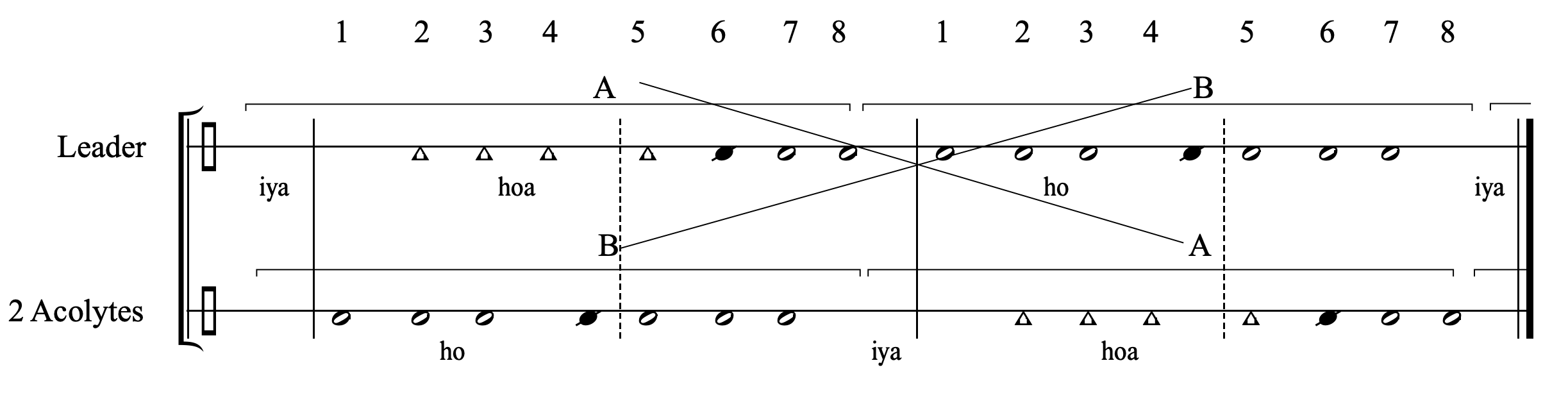
Finally, when the two characters rise, the ōtsuzumi player introduces sparse strokes that disrupt the steadiness of the kotsuzumi’s pattern, ultimately leading to its dissolution. This procedure, performed by the ōtsuzumi, is called oshirabe, in reference to the unmetered strokes played during tuning prior to the beginning of a play.